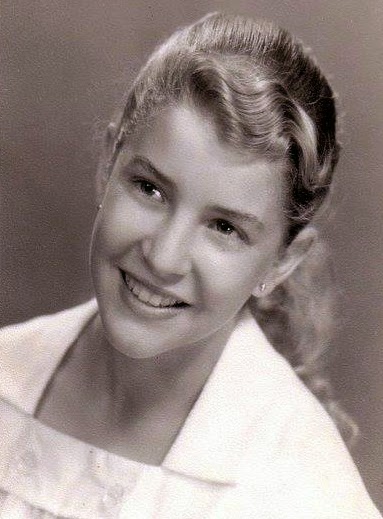
YOU STEPPED OUT OF A DREAM

JULIE LONDON
SONGWRITERS: KAHN GUS & BROWN NACIO HERB
COUNTRY: U. S. A.
ALBUM: JULIE… AT HOME
LABEL: LIBERTY RECORDS
GENRE: JAZZ
YEAR: 1960
 
         Julie London (née Peck; September 26, 1926 – October 18, 2000) was an American singer and actress whose career spanned more than 40 years. A torch singer noted for her sultry, languid contralto vocals, London recorded over thirty albums of pop and jazz standards between 1955 and 1969. Her recording of "Cry Me a River", a track she introduced on her debut album, was inducted into the Grammy Hall of Fame in 2001. In addition to her musical notice, London was nominated for a Golden Globe Award in 1974 for her portrayal of nurse Dixie McCall in the television series Emergency!.
       Born in Santa Rosa, California to vaudevillian parents, London was discovered while working as an elevator operator in downtown Los Angeles, and began her career as an actress. London's 35-year acting career began in film in 1944, and included roles as the female lead in numerous westerns, co-starring with Rock Hudson in The Fat Man (1951), with Robert Taylor and John Cassavetes in Saddle the Wind (1958), and opposite Robert Mitchum in The Wonderful Country (1959).
          In the mid-1950s, she signed a recording contract with the newly established Liberty Records, marking the beginning of her professional musical career. She released her final studio album in 1969, but achieved continuing success playing the female starring role of nurse Dixie McCall, in the television series Emergency! (1972–1979), in which she appeared opposite her real-life husband, Bobby Troup. The show was produced by her ex-husband, Jack Webb.
          A shy and introverted woman, London rarely granted interviews, and spent the remainder of her life out of the public sphere. In 1995, she suffered a stroke, which left her with permanent health problems. In 1999, she was diagnosed with lung cancer, but forewent treatment due to her already compromised physical state. She died of cardiac arrest the following year in Los Angeles, aged 74.
          Julie...At Home is an LP album by Julie London, released by Liberty Records under catalog number LRP-3152 as a monophonic recording in 1960, and later in stereo under catalog number LST-7152 the same year.
You stepped out of a dream
You are too wonderful to be what you seem
Could there be eyes like yours
Could there be lips like yours
Could there be smiles like yours
Honest and truly?
 
You stepped out of a cloud
I want to take you away, away from the crowd
And have you all to myself
Alone and apart out of a dream
Safe in my heart
 
You stepped out of a dream
You are too wonderful to be what you seem
Could there be eyes like yours
Could there be lips like yours
Could there be smiles like yours
Honest and truly?
 
You stepped out of a cloud
I want to take you away, away from the crowd
And have you all to myself
Alone and apart out of a dream
Safe in my heart.

RAMBLIN' ROSE

NAT KING COLE
SONGWRITERS: JOE SHERMAN & NOEL SHERMAN
COUNTRY: U. S. A.
ALBUM: RAMBLIN’ ROSE
LABEL: CAPITOL RECORDS
GENRE: JAZZ
YEAR: 1962
 
           Nathaniel Adams Coles (March 17, 1919 – February 15, 1965), known professionally as Nat King Cole, was an American singer and jazz pianist. He recorded over 100 songs that became hits on the pop charts. His trio was the model for small jazz ensembles that followed. Cole also acted in films and on television and performed on Broadway. He was the first African-American man to host an American television series. He was the father of singer-songwriter Natalie Cole(1950–2015).
          Ramblin' Rose is a Nat King Cole album. It was released by Capitol Records in 1962, and features the popular title track. The LP peaked at #3 on Billboards album chart where it remained for more than a year. It was Nat's second gold album.

Ramblin' rose, ramblin' rose
Why you ramble, no one knows
Wild and wind-blown, that's how you've grown
Who can cling to a ramblin' rose?
 
Ramble on, ramble on
When your ramblin' days are gone
Who will love you with a love true
When your ramblin' days are through?
 
Ramblin' rose, ramblin' rose
Why I want you, heaven knows
Though I love you with a love true
Who can cling to a ramblin' rose?
One more time, everybody, now
 
Ramblin' rose, ramblin' rose
Why I want you, heaven knows
Though I love you with a love true
Who can cling to a ramblin' rose?

TELLING STORIES

TRACY CHAPMAN
SONGWRITER: TRACY CHAPMAN
COUNTRY: U. S. A.
ALBUM: TELLING STORIES
LABEL: ELEKTRA RECORDS
GENRE: FOLK MUSIC
YEAR: 2000
 
       Tracy Chapman (born March 30, 1964) is an American singer-songwriter, known for her hits "Fast Car" and "Give Me One Reason", along with other singles "Talkin' 'bout a Revolution", "Baby Can I Hold You", "Crossroads", "New Beginning", and "Telling Stories". She is a multi-platinum and four-time Grammy Award–winning artist.
           Chapman was signed to Elektra Records by Bob Krasnow in 1987. The following year she released her critically acclaimed debut álbum Tracy Chapman, which became a multi-platinum worldwide hit. The album earned Chapman six Grammy Award nominations, including Album of the Year, three of which she won: Best New Artist, Best Female Pop Vocal Performance for her single "Fast Car", and Best Contemporary Folk Album for her album Tracy Chapman. Chapman released her second álbum Crossroads the following year, which garnered her an additional Grammy nomination. Since then, Chapman has experienced further success with six more studio albums, which include her multi-platinum fourth álbum New Beginning, for which she won a fourth Grammy Award, for Best Rock Song, for its lead single "Give Me One Reason". Chapman's most recent album is Our Bright Future, released in 2008.
Telling Stories is the fifth album by American singer-songwriter Tracy Chapman, released in 2000 (see 2000 in music). It was her first album in over four years, and her first since Crossroads to be produced or co-produced by David Kershenbaum. A special 2 CD tour edition of this album was also released in May 2000, supporting the tour going on at the time. The album is composed of contemporary rock songs in the first half, and folk songs in the second half. The song "Unsung Psalm" was originally written for her previous album, New Beginning, but it didn't make it onto the album.
            The record marked a return to shorter songs for Tracy; on New Beginning they had been somewhat longer.

 There is fiction in the space between
The lines on your page of memories
Write it down but it doesn't mean
You're not just telling stories
 
There is fiction in the space between
You and reality
You will do and say anything
To make your everyday life seem less mundane
There is fiction in the space between
You and me
 
There's a science fiction in the space between
You and me
A fabrication of a grand scheme
Where I am the scary monster
I eat the city and as I leave the scene
In my spaceship I am laughing
In your remembrance of your bad dream
There's no one but you standing
 
Leave the pity and the blame
For the ones who do not speak
You write the words to get respect and compassion
And for posterity
You write the words and make believe
There is truth in the space between
 
There is fiction in the space between
You and everybody
Give us all what we need
Give us one more sad sordid story
But in the fiction of the space between
Sometimes a lie is the best thing
Sometimes a lie is the best thing.

PEQUEÑA SERENATA DIURNA

SILVIO RODRIGUEZ
COMPOSITOR: SILVIO RODRIGUEZ
PAIS: CUBA
ALBUM: DÍAS Y FLORES
DISCOGRÁFICA: EGREM
GÉNERO: TROVA
AÑO: 1975
 
     Silvio Rodríguez Domínguez (nacido el 29 de noviembre de 1946) es un músico cubano y líder del movimiento Nueva Trova.
         Es ampliamente considerado el mejor cantante de folk de Cuba y posiblemente uno de los más grandes cantautores de América Latina. [1] Conocido por sus letras intelectuales, altamente elocuentes y simbólicas, sus canciones son elementos icónicos de la cultura intelectual de izquierda latinoamericana. Muchas de sus canciones se han convertido en clásicos de la música latinoamericana, como "Ojalá", "Playa Girón", "Unicornio", "Sueño con Serpientes", "Vamos a andar" y "La maza". Entre sus otras canciones conocidas se encuentran himnos políticos como "Fusil contra fusil" y "Canción del Elegido", y melodías poéticas como "A donde van" y "Noche sin fin y mar". Ha lanzado más de 20 álbumes.
        Rodríguez, musical y políticamente, es un símbolo de la izquierda latinoamericana. Sus letras son notablemente introspectivas, mientras que sus canciones combinan romanticismo, erotismo, existencialismo, política revolucionaria e idealismo. Como humanista, sus canciones a menudo revelan una cosmovisión secular, donde la humanidad debe sacar lo mejor de este mundo. Se le ha referido como "el John Lennon de Cuba".
             Días y Flores es el primer álbum de estudio del cantautor cubano Silvio Rodríguez, lanzado en 1975.
El disco fue censurado en la España franquista. Se modificó la lista de canciones y se cambió el nombre del álbum a Te Doy una Canción. Se omitieron las canciones Santiago de Chile y la canción principal Días y Flores y fueron reemplazadas por Madre y Te Doy una Canción. Con el fin de la dictadura se volvieron a sumar las dos canciones, las nuevas ediciones en España cuentan con trece canciones.
      Asimismo, el álbum también fue censurado en Chile, debido al régimen de Augusto Pinochet. Circuló un casete titulado Te Doy una Canción, que no contenía las canciones Santiago de Chile, Playa Girón, Como esperando abril y Pequeña Serenata Diurna, sin embargo sí incluía Te Doy una Canción y una versión en vivo de Mariposas. También hay un CD como la versión española, que añade Madre después de Santiago de Chile, y cambia Días y flores por Te Doy una Canción.

Vivo en un país libre
Cual solamente puede ser libre
En esta tierra, en este instante
Y soy feliz porque soy gigante.
Amo a una mujer clara
Que amo y me ama
Sin pedir nada
-o casi nada,
Que no es lo mismo
Pero es igual-.
 
Y si esto fuera poco,
Tengo mis cantos
Que poco a poco
Muelo y rehago
Habitando el tiempo,
Como le cuadra
A un hombre despierto.
Soy feliz,
Soy un hombre feliz,
Y quiero que me perdonen
Por este día
Los muertos de mi felicidad.