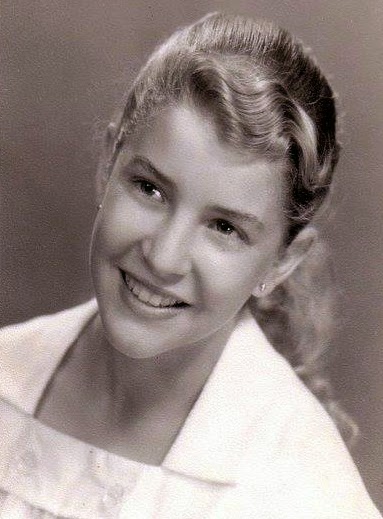
Bread was an American soft rockband from Los
Angeles, California.
They had 13 songs chart on the Billboard
Hot 100between 1970 and 1977.
The band was fronted by David Gates(vocals, bass guitar,
guitar, keyboards,
violin, viola, percussion),
with Jimmy Griffin(vocals, guitar, keyboards, percussion)
and Robb Royer(bass guitar, guitar, flute,
keyboards, percussion, recorder, backing vocals).
On their first album session musicians Ron Edgar played drumsand Jim
Gordonplayed drums,
percussion,
and piano. Mike Bottsbecame their permanent drummer when he joined in the summer of 1969,
and Larry Knechtelreplaced Royer in 1971, playing keyboards, bass guitar, guitar, and harmonica.
Baby I'm-a Want You is the fourth albumby Bread,
released in 1972. Its singles included the title cut(which reached No. 3 on the
Billboard Top 100), "Everything I Own" (Nº. 5), "Mother
Freedom" (No. 37), and "Diary" (Nº. 15). This was the first
Bread album to feature keyboard player Larry Knechtel.
Baby, I'm-a want you
Baby, I'm-a need you
You the only one I care enough to hurt about
Maybe I'm-a crazy
But I just can't live without...
Your lovin' and affection
Givin' me direction
Like a guiding light to help me through a darkest hour
Lately I'm a-prayin'
That you'll always be a-stayin' beside me
Used to be my life
was just emotions passing by
Feeling all the while and never really knowing why...
Lately I'm a-prayin'
That you'll always be a-stayin' beside me.
Used to be my life
was just emotions passing by
Then you came along and made me laugh
And made me cry...
You taught me why...
Baby, I'm-a want you
Baby, I'm-a need you
Oh, it took so long to find you, baby
Baby, I'm-a want you
Baby, I'm-a need you.
REASONS TO QUIT
WILLIE NELSON & MERLE HAGGARD
SONGWRITERS: MERLE HAGGARD
COUNTRY: U. S. A.
ALBUM: PANCHO & LEFTY
LABEL: EPIC RECORDS
GENRE: COUNTRY
YEAR: 1983
Merle Ronald Haggard (April 6, 1937 –
April 6, 2016) was an American countrysinger, songwriter, guitarist, and fiddler.
Haggard was born in Oildale,
California, during the Great Depression.
His childhood was
troubled after the death of his father, and he was incarcerated several times
in his youth. After being released from San Quentin State Prisonin 1960, he
managed to turn his life around and launch a successful country music career.
He gained popularity with his songs about the working class that occasionally
contained conformistand jingoistic themes contrary to the prevailing anti-Vietnam Warsentiment of much popular music of the time. Between the 1960s and
the 1980s, he had 38 number-one hits on the US country charts, several of which
also made the Billboard all-genre singles chart.
Haggard continued to
release successful albums into the 2000s.
He received many honors and awards for his
music, including a Kennedy
Center Honor(2010), a Grammy Lifetime Achievement Award(2006), a BMI Icon Award(2006), and induction into the Nashville Songwriters Hall of Fame(1977), Country Music Hall of Fame(1994) and Oklahoma Music Hall of Fame(1997). He
died on April 6, 2016—his 79th birthday—at his ranch in Shasta County, California, having
recently suffered from double pneumonia.
Willie
Hugh Nelson (born April 29, 1933) is an American musician, actor, and
activist. The critical success of the álbum Shotgun Willie(1973), combined with the critical and commercial success of Red
Headed Stranger(1975) and Stardust(1978), made Nelson one of
the most recognized artists in country music. He was one of the main figures of
outlaw country,
a subgenre of country music that developed in the late 1960s as a reaction to
the conservative restrictions of the Nashville
sound. Nelson has acted in over 30 films,
co-authored several books, and has been involved in activism for the use of biofuelsand the legalization
of marijuana.
Born during the Great Depressionand raised by his grandparents, Nelson wrote his first song at age
seven and joined his first band at ten. During high school, he toured locally with the
Bohemian Polka as their lead singer and guitar player. After
graduating from high school in 1950, he joined the U.S. Air Forcebut was later discharged due to back problems. After his return,
Nelson attended Baylor Universityfor two years but dropped out because he was succeeding in music.
During this time, he worked as a disc
jockeyin Texasradio
stations and a singer in honky-tonks.
Nelson moved to Vancouver,
Washington, where he wrote "Family
Bible" and recorded the song
"Lumberjack" in 1956. He also worked as a disc jockey at various
radio stations in Vancouver and nearby Portland,
Oregon. In 1958, he moved to Houston, Texas,
after signing a contract with D Records.
He sang at the Esquire Ballroomweekly and he worked as a disk jockey. During that time, he wrote songs
that would become country standards, including "Funny How Time Slips Away", "Hello
Walls", "Pretty Paper", and "Crazy". In 1960
he moved to Nashville,
Tennessee, and later signed a publishing contract with
Pamper Music which allowed him to join Ray
Price'sband as a bassist. In 1962, he
recorded his first album, ...And
Then I Wrote. Due to this success, Nelson
signed in 1964 with RCA Victorand joined the Grand
Ole Oprythe following year. After mid-chart
hits in the late 1960s and the early 1970s, Nelson retired in 1972 and moved to
Austin, Texas.
The ongoing music scene of Austin motivated Nelson to return from retirement,
performing frequently at the Armadillo World Headquarters.
In 1973, after signing with Atlantic Records,
Nelson turned to outlaw country, including albums such as Shotgun Willie and Phases
and Stages. In 1975,
he switched to Columbia Records, where he recorded the critically acclaimed
album Red Headed Stranger. The same year, he recorded
another outlaw country album, Wanted!
The Outlaws, along with Waylon Jennings,
Jessi Colter,
and Tompall Glaser.
During the mid-1980s, while creating hit albums like Honeysuckle Roseand recording
hit songs like "On the Road Again",
"To All the Girls I've Loved Before",
and "Pancho and Lefty",
he joined the country supergroupThe Highwaymen, along with fellow singers Johnny Cash,
Waylon Jennings,
and Kris
Kristofferson.
Pancho & Lefty is a honky tonkalbum by outlawcountry musiciansMerle Haggardand Willie Nelson,
released in 1983.
Original vinyl copies from 1983 give the album's title as "Poncho&
Lefty" on the cover, as well as on the inner sleeve and the record label;
the album's title track is similarly rendered "Poncho & Lefty" on
the cover, inner sleeve, and label. Later editions correct the title to the intended
"Pancho & Lefty". They are backed by Don Markham of The Strangers.
Reasons to quit the smoke and beer don't do me like before
And I'm hardley ever sober and my ole friends
Don't come round much anymore
Reasons to quit the low is always lower than the high
And the reasons for quitin' dont outnumber all the reasons why
So we keep smokin and we keep drinkin
Havin fun and never thinkin'
Laughin' at the price tags the we pay
And we keep roarin down the fast lane
Like two young men feelin no pain
And the reasons for quitin' are gettin bigger each day
Reasons to quit I cant afford the habit all the time
And I need be sober I gotta write some new songs that will rhyme
Reasons to quit there ain't no rhyme or reason when your high
And the reasons for quitin' don't outnumber all the reasons why
So we keep smokin and we keep drinkin
Havin fun and never thinkin'
Laughin' at the price tags the we pay
And we keep roarin down the fast lane
Like two young men feelin no pain
And the reasons for quitin' are gettin bigger each day.
BLUE ON BLACK
KENNY WAYNE SHEPHERD BAND
SONGWRITERS: KENNY
WAYNE SHEPHERD; MARK SELBY & TIA SILLERS
COUNTRY: U. S. A.
ALBUM: BLUE ON BLACK
LABEL: REVOLUTION RECORDS
GENRE: BLUES ROCK
YEAR:1998
Kenny Wayne Shepherd (born Kenny Wayne Brobst;
June 12, 1977) is an American guitarist, singer, and songwriter. He has
released several studio albums and experienced significant commercial success
as a bluesartist.
"Blue on Black" is a song by
American blues rockband Kenny
Wayne Shepherd Band. Written by Shepherd with
songwriters Mark
Selbyand Tia Sillers;
Noah Hunt provides the lead vocal. The song was originally released on their
second studio album, Trouble Is...(1997). On April 7, 1998, it was released as a single and spent 42
weeks on the US BillboardHot Mainstream Rock Trackschart and rose
to number one, remaining there for six non-consecutive weeks. In 2019, Shepherd
teamed up with American heavy metal band Five
Finger Death Punch, along with country singer Brantley Gilbertand Queenguitarist Brian Mayfor a reworked version of "Blue on Black".
"Blue on Black" was regarded as the
best rock song of 1998 by various media,
including winning the Billboard
Music Awardfor Rock Track of the Year and the
song's popularity helped make Trouble Is... the 1999 Blues Album of
the Year in Billboard. The song continues to be a top download of the
Kenny Wayne Shepherd catalog, ranking at number one on Rhapsody. It is also his most-listened to
song on Spotifywith over 26 million streams.
Marta
Pereira da Costa é a primeira e, actualmente, a única guitarrista profissional
de Fado a nível Mundial. A guitarra portuguesa está muito associada ao Fado, e
Marta, não esquecendo as raízes e a tradição, arriscou novas sonoridades e
procurou dar voz ao seu instrumento pelo mundo do Jazz, World Music, Música
Portuguesa. Foi distinguida em 2014 pela Fundação Amália Rodrigues com o
"Prémio Instrumentista“.
Carlos Manuel
Moutinho Paiva dos Santos, conhecido por Camané (Oeiras, 20 de Dezembro de 1966), é um fadistaportuguês. É irmão mais velho dos fadistas Hélder Moutinho e Pedro Moutinho.
Camané desperta para
a música um pouco por acaso, quando durante a recuperação de uma maleita
infantil se embrenhou na coleção de discos dos pais. Além de Frank Sinatra, Charles Aznavour e Os Beatles, deixa-se fascinar pelos grandes
intérpretes do Fado: Amália Rodrigues, Fernando
Maurício, Lucília do Carmo, Maria
Teresa de Noronha, Alfredo Marceneiro e Carlos do Carmo.Como conta o fadista em entrevista ao Diário de Notícias (cf. «Gravei o meu primeiro disco após um telefonema de Amália», in DN, 28 de abril de 2013


 Postagens