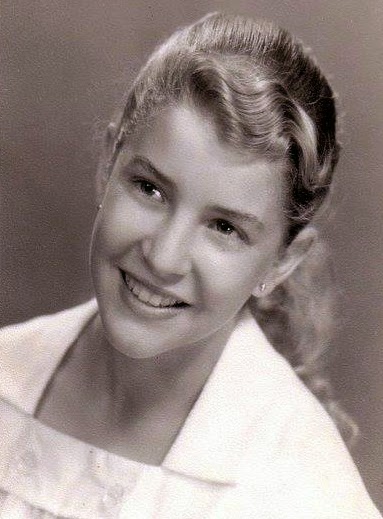
SÍ EL POETA ERES TÚ

SOLEDAD BRAVO
COMPOSITOR: PABLO MILANÉS
PAIS: ESPAÑA
ÁLBUM: CANTOS REVOLUCIONÁRIOS DE AMÉRICA LATINA
DISCOGRÁFICA: CBS
GÉNERO: FOLKLÓRICA /PROTESTO
AÑO: 1977
 
           Soledad Bravo (Logroño, España, 13 de noviembre de 1943) es una cantante venezolana de origen español. Se caracteriza por su potente voz y conocedora del vasto repertorio musical hispanoamericano, ha abordado con solvencia los más variados géneros musicales. Sus comienzos están asociados a la canción folklórica y de protesta donde alcanzó gran popularidad, sirviendo de vehículo para dar a conocer a los compositores más representativos de la llamada «Nueva Trova Cubana» y de la «Nueva canción latinoamericana» junto a Mercedes Sosa.
       En los años 1980 dio un giro a su carrera artística incursionando dentro del género de la salsa y grabando junto a Willie Colón y otros grandes exponentes del género tres álbumes grabados en la ciudad de Nueva York. Dentro de su repertorio discográfico que rebasa los 30 álbumes y más de 40 años de carrera artística, están presentes los más prolíficos compositores de habla hispana y géneros tan variados como: la canción protesta, el folclore, la salsa, el jazz, el bolero, la ranchera y la canción urbana contemporánea.
          Su familia emigró a Venezuela a principios de los años 50 por lo que la cantante realizó sus estudios básicos en la ciudad de Caracas, donde cantaba en eventos estudiantiles. En 1967 ingresó a la Universidad Central de Venezuela donde participó en actividades artísticas cantando y en obras teatrales, organizadas por la Facultad de Arquitectura. Formó parte de los procesos de renovación universitaria identificándose con los ideales «socialistas» muy en boga en aquella época. Allí la conoció la periodista venezolana Sofía Imber, que la invitó a participar diariamente y durante un año en su programa televisivo matinal «Buenos Días», con el que se dio a conocer al gran público venezolano.
Sí el poeta eres tú
Como dijo el poeta
Y el que ha tumbado estrellas
En mil noches
De lluvias coloridas eres tú
Qué tengo yo que hablarte comandante
Si el que asomó al futuro su perfil
Y lo estrenó con voces de fusil
Fuiste tú, guerrero para siempre, tiempo eterno
Qué puedo yo cantarte comandante
En vano busco en mi guitarra tu dolor
Y en mi jardín ya todo es bello no hay temor
Qué puedo yo dejarte comandante
Que no sea cambiar mi guitarra por tu suerte
O negarle una canción al sol
O morir sin amor
 
Qué puedo yo cantarte comandante
Si el poeta eres tú
Como dijo el poeta
Y el que ha tumbado estrellas
En mil noches de lluvias coloridas eres tú
Qué puedo yo cantarte comandante.

LIVING FOR THE CITY

STEVIE WONDER
SONGWRITER: STEVIE WONDER
COUNTRY: U. S. A.
ALBUM: INNERVISIONS
LABEL: TAMLA
GENRE: SOUL
YEAR: 1973
 
            Stevland Hardaway Morris (born Judkins; born May 13, 1950), known professionally as Stevie Wonder, is an American singer, songwriter, musician and record producer. A prominent figure in popular music during the second half of the 20th century, Wonder is one of the most successful songwriters and musicians. A virtual one-man band, his use of synthesizers and further electronic musical instruments during the 1970s reshaped the conventions of R&B. He also helped drive the genre into the album era, crafting his LPs as cohesive, consistent socially conscious statements with complex compositions. Wonder is often hailed as a "genius", and has been credited as a pioneer and influence to musicians of various genres including rhythm and blues, pop, soul, gospel, funk and jazz.
            Blind since shortly after his birth, Wonder was a child prodigy known as Little Stevie Wonder, leading him to sign with Motown's Tamla label at the age of 11. In 1963, the single "Fingertips" was a number-one hit on the Billboard Hot 100 when Wonder was 13, making him the youngest artist ever to top the chart. Wonder's critical success was at its peak in the 1970s. His "classic period" began in 1972 with the releases of Music of My Mind and Talking Book, the latter featuring "Superstition", which is one of the most distinctive and famous examples of the sound of the Hohner Clavinet keyboard. His works Innervisions (1973), Fulfillingness' First Finale (1974) and Songs in the Key of Life (1976) all won the Grammy Award for Album of the Year, making him the tied-record holder for the most Album of the Year wins, with three. He is also the only artist to have won the award with three consecutive album releases.
        Wonder's "classic period", which culminated in 1976, was marked by his funky keyboard style, personal control of production, and use of integrated series of songs to make concept albums. In 1979, Wonder used Computer Music Inc.'s early music sampler, the Melodian, on his soundtrack album Stevie Wonder's Journey Through "The Secret Life of Plants". This was his first digital recording and one of the earliest popular albums to use the technology, which Wonder used for all subsequent recordings. The pioneering stylistics of Wonder's 1970s albums are widely regarded as having influenced the shape of pop music in the following decade.
      Wonder has sold over 100 million records worldwide, making him one of the best-selling music artists of all time. He has won 22 Grammy Awards. He was the first Motown artist and second African-American musician to win na Academy Award for Best Original Song, for the 1984 film The Woman in Red. Wonder has been inducted into the Rhythm and Blues Music Hall of Fame, Rock and Roll Hall of Fame and Songwriters Hall of Fame, and has received a star on the  Hollywood Walk of Fame. He is also noted for his work as an activist for political causes, including his 1980 campaign to make Martin Luther King Jr.'s birthday a federal holiday in the United States. In 2009, he was named a United Nations Messenger of Peace. In 2014, he was honored with the Presidential Medal of Freedom.
        "Living for the City" is a 1973 single by Stevie Wonder from his Innervisions album. It reached number 8 on the Billboard Hot 100 chart and number 1 on the R&B chart. Rolling Stone ranked the song number 105 on their list of the "500 Greatest Songs of All Time".
         The song has won two Grammy Awards: one at the 1974 Grammy Awards for Best Rhythm & Blues Song, and the second for Best Male R&B Vocal Performance at the 1975 Grammy Awards for Ray Charles' recording on his album Renaissance.
          Wonder played all the instruments on the song and was assisted by Malcolm Cecil and Robert Margouleff for recording engineering and synthesizer programming. Tenley Williams, writing in Stevie Wonder (2002), feels it was "one of the first soul hits to include both a political message and ... sampling ... of the sounds of the streets - voices, buses, traffic, and sirens - mixed with the music recorded in the studio."
 
A boy is born in hard time Mississippi
Surrounded by four walls that ain't so pretty
His parents give him love and affection
To keep him strong moving in the right direction
Living just enough, just enough for the city...ee ha!
 
His father works some days for fourteen hours
And you can bet he barely makes a dollar
His mother goes to scrub the floor for many
And you'd best believe she hardly gets a penny
Living just enough, just enough for the city...yeah
 
His sister's black but she is sho 'nuff pretty
Her skirt is short but lord her legs are sturdy
To walk to school she's got to get up early
Her clothes are old but never are they dirty
Living just enough, just enough for the city...um hum
 
Her brother's smart he's got more sense than many
His patience's long but soon he won't have any
To find a job is like a haystack needle
Cause where he lives they don't use colored people
Living just enough, just enough for the city
Living just enough
For the city, ooh, ooh
 
His hair is long, his feet are hard and gritty
He spends his love walking the streets of new york city
He's almost dead from breathing on air pollution
He tried to vote but to him there's no solution
Living just enough, just enough for the city, yeah, yeah, yeah!
 
I hope you hear inside my voice of sorrow
And that it motivates you to make a better tomorrow
This place is cruel no where could be much colder
If we don't change the world will soon be over
Living just enough, just enough for the city!
 
La, la, la, la, la, la
Da ba da da da da da da
Da da da da da da
Da ba da da da da da da da.

FOUR STRONG WINDS

NEIL YOUNG
SONGWRITER: IAN TYSON
COUNTRY: CANADA
ALBUM: COMES A TIME
LABEL: REPRISE
GENRE: ROCK
YEAR: 1978
 
          Neil Percival Young OC OM (born November 12, 1945) is a Canadian-American singer-songwriter, musician, and activist. After embarking on a music career in the 1960s, he moved to Los Angeles, joining Buffalo Springfield with Stephen Stills, Richie Furay and others. Since the beginning of his solo career with his backing band Crazy Horse, Young has released many critically acclaimed and important albums, such as After the Gold Rush, Everybody Knows This Is Nowhere, and Harvest.
          Young has received several Grammy and Juno Awards. The Rock and Roll Hall of Fame inducted him twice: in 1995 as a solo artist and in 1997 as a member of Buffalo Springfield. In 2000, Rolling Stone named Young the 34th greatest rock 'n roll artist. His guitar work, deeply personal lyrics and signature tenor singing voice define his long career. He also plays piano and harmonica on many albums, which frequently combine folk, rock, country and other musical styles. His often distorted electric guitar playing, especially with Crazy Horse, earned him the nickname "Godfather of Grunge" and led to his 1995 album Mirror Ball with Pearl Jam. More recently he has been backed by Promise of the Real. His 21 albums and singles have been certified Gold and Platinum in U.S by RIAA certification.
            Young directed (or co-directed) films using the pseudonym Bernard Shakey, including Journey Through the Past (1973), Rust Never Sleeps (1979), Human Highway (1982), Greendale (2003), and CSNY/Déjà Vu (2008). He also contributed to the soundtracks of the films Philadelphia (1993) and Dead Man (1995).
           Young has lived in California since the 1960s but retains Canadian citizenship.  He was awarded the Order of Manitoba on July 14, 2006, and was made an Officer of the Order of Canada on December 30, 2009. He became a United States citizen, taking dual citizenship, on January 22, 2020.
        "Four Strong Winds" is a song written by Ian Tyson and recorded by Canadian folk duo Ian and Sylvia. Tyson has noted that he composed the song in about 20 minutes in his then manager Albert Grossman's New York apartment in 1961. A significant composition of the early 1960s folk revival, the song is a melancholy reflection on a failing romantic relationship. The singer expresses a desire for a possible reunion in a new place in the future ("You could meet me if I sent you down the fare") but acknowledges the likelihood that the relationship is over ("But our good times are all gone/And I'm bound for moving on ...").
        The song has a clear Canadian context and subtext, including an explicit mention of the province Alberta as well as references to long, cold winters. In 2005, CBC Radio One listeners chose this song as the greatest Canadian song of all time on the program 50 Tracks: The Canadian Version. It is considered the unofficial anthem of Alberta
 
Think I'll go out to Alberta
Weather's good there in the fall
I got some friends that I could go to working for
Still, I wish you'd change your mind
If I ask you one more time
But we've been through this a hundred times or more
 
Four strong winds that blow lonely
Seven seas that run high
All those things that don't change, come what may
If the good times are all gone
Then I'm bound for moving on
I'll look for you if I'm ever back this way
 
If I get there before the snow flies
And if things are looking good
You could meet me if I send you down the fare
But by then it would be winter
Not too much for you to do
And those winds sure can blow cold way out there
 
Four strong winds that blow lonely
Seven seas that run high
All those things that don't change, come what may
The good times are all gone
So I'm bound for moving on
I'll look for you if I'm ever back this way
 
Still, I wish you'd change your mind
If I ask you one more time
But we've been through that a hundred times or more
 
Four strong winds that blow lonely
Seven seas that run high
All those things that don't change, come what may
If the good times are all gone
Then I'm bound for moving on
I'll look for you if I'm ever back this way
I'll look for you if I'm ever back this way.

APRIL COME SHE WILL

SIMON & GARFUNKEL
SONGWRITHER: PAUL SIMON
COUNTRY: U. S.A.
ALBUM: SOUNDS OF THE SILENCE
LABEL: COLUMBIA RECORDS
GENRE: FOLK ROCK
YEAR: 1965
 
         Simon & Garfunkel were an American folk-rock duo consisting of singer-songwriter Paul Simon and singer Art Garfunkel. They were one of the best-selling music groups of the 1960s, and their biggest hits—including "The Sound of Silence" (1965), "Mrs. Robinson" (1968), "The Boxer" (1969), and "Bridge over Troubled Water" (1970)—reached number one on singles charts worldwide.
           Simon and Garfunkel met at Forest Hills Junior Elementary School in Queens, New York, in 1953, where they learned to harmonize together and began writing material. By 1957, under the name Tom & Jerry, the teenagers had their first minor success with "Hey Schoolgirl", a song imitating their idols the Everly Brothers. In 1963, aware of a growing public interest in folk music, they regrouped and were signed to Columbia Records as Simon & Garfunkel. Their debut, Wednesday Morning, 3 A.M., sold poorly, and they once again disbanded; Simon returned to a solo career, this time in England. In June 1965, a new version of "The Sound of Silence" overdubbed with electric guitar and drums became a major U.S. AM radio hit, reaching number one on the Billboard Hot 100. The duo reunited to release a second studio album, Sounds of Silence, and tour colleges nationwide. On their third release, Parsley, Sage, Rosemary and Thyme (1966), the duo assumed more creative control. Their music was featured in the 1967 film The Graduate, giving them further exposure. Their next álbum Bookends (1968) topped the Billboard 200 chart and included the number-one single "Mrs. Robinson" from the film.
       The duo's often rocky relationship led to artistic disagreements and their breakup in 1970. Their final studio album, Bridge over Troubled Water, was released that year and became their most successful, becoming one of the world's best-selling albums. After their breakup, Simon released a number of acclaimed albums, including 1986's Graceland. Garfunkel released solo hits such as "All I Know" and briefly pursued an acting career, with leading roles in two Mike Nichols films, Catch-22 and Carnal Knowledge, and in Nicolas Roeg's 1980 Bad Timing. The duo have reunited several times, most famously in 1981 for The Concert in Central Park, which attracted more than 500,000 people, one of the largest concert attendances in history.
       Simon & Garfunkel won 10 Grammy Awards and were inducted into the Rock and Roll Hall of Fame in 1990. Rolling Stone ranked them number 3 on its list of the 20 Greatest Duos of All Time. Richie Unterberger described them as "the most successful folk-rock duo of the 1960s" and one of the most popular artists from the decade. They are among the best-selling music artists, having sold more than 100 million records. Bridge over Troubled Water is ranked at number 172 on Rolling Stone's 500 Greatest Albums of All Time.
          "April Come She Will" is a song by American music duo Simon & Garfunkel from their second studio album, Sounds of Silence (1966). It originally appeared on the solo álbum The Paul Simon Songbook. It is the B-side to the hit single "Scarborough Fair/Canticle". It is included on the The Graduate soundtrack album and was additionally released on the "Mrs. Robinson 'EP'" in 1968, together with three other songs from the The Graduate film: Mrs. Robinson, Scarborough Fair/Canticle, and The Sound of Silence.
         The song was written in 1964 while Paul Simon was in England. Its lyrics use the changing nature of the seasons as a metaphor for a girl's changing moods. The inspiration for the song was a girl that Simon met and the nursery rhyme she used to recite, "Cuckoo". It is the shortest song on the album. According to the sheet music published at Musicnotes.com by Sony/ATV Music Publishing, the song is composed in the key of G Major with Paul Simon's vocal range spanning from D3 to D4. On the duo's recording, Art Garfunkel sings the lead vocals.
April come she will
When streams are ripe and swell with rain
May she will stay
Resting in my arms again
 
June she'll change her tune
In restless walks she'll prowl the night
July she will fly
And give no warning to her flight
 
August die she must
The autumn winds blow chilly and cold
September I'll remember
A love once new has now grown old.