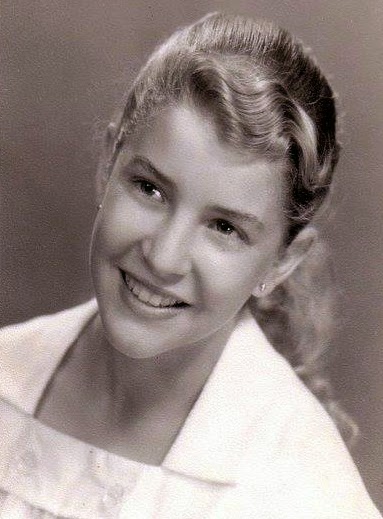
SUMMERTIME BLUES

EDDIE COCHRAN
SONGWRITER: EDDIE COCHRAN & JERRY CAPEHART
COUNTRY: U. S. A.
ALBUM: SUMMERTIME BLUES
LABEL: LIBERTY
GENRE: ROCKABILLY
YEAR: 1958
 
           Ray Edward Cochran (/ˈkɒkrən/; October 3, 1938 – April 17, 1960) was an American rock and roll musician. Cochran's songs, such as "Twenty Flight Rock", "Summertime Blues", "C'mon Everybody", and "Somethin' Else", captured teenage frustration and desire in the mid-1950s and early 1960s. He experimented with multitrack recording, distortion techniques, and overdubbing even on his earliest singles. He played the guitar, piano, bass, and drums. His image as a sharply dressed and attractive young man with a rebellious attitude epitomized the stance of the 1950s rocker, and in death he achieved iconic status.
            Cochran was involved with music from an early age, playing in the school band and teaching himself to play blues guitar. In 1954, he formed a duet with the guitarist Hank Cochran (no relation). When they split the following year, Eddie began a songwriting career with Jerry Capehart. His first success came when he performed the song "Twenty Flight Rock" in the film The Girl Can't Help It, starring Jayne Mansfield. Soon afterward, he signed a recording contract with Liberty Records and his first record for the label, Sittin' in the Balcony, rose to number 18 on the Billboard charts.
             Cochran died at age 21 in St Martin's Hospital, Bath, Somerset, after a road accident in Chippenham, Wiltshire, at the end of his British tour in April 1960. He had just performed at the Bristol Hippodrome. Though his best-known songs were released during his lifetime, more of his songs were released posthumously. In 1987, Cochran was inducted into the Rock and Roll Hall of Fame. His songs have been recorded by a wide variety of recording artists.
         "Summertime Blues" is a song co-written and recorded by American rock and rockabilly artist Eddie Cochran. It was written by Cochran and his manager Jerry Capehart. Originally a single B-side, it was released in August 1958 and peaked at number 8 on the Billboard Hot 100 on September 29, 1958 and number 18 on the UK Singles Chart. It has been covered by many artists, including being a number-one hit for country music artist Alan Jackson, and scoring notable hits in versions by Blue Cheer, The Who, and Brian Setzer, the last of whom recorded his version for the 1987 film La Bamba, in which he portrayed Cochran. Jimi Hendrix performed it in concert.
I'm gonna raise a fuss
I'm gonna raise a holler
A-but-a workin' all summer
Just-a trying to earn a dollar
Every time I call my baby
And ask her to date
My boss says: Uh duh son
You gotta work late
Sometimes I wonder
What I'm-a gonna do
But there ain't no cure
For the summertime blues
 
Well my mama papa told me
Son, you gotta make some money
If you wanna use the car
To go ridin' next Sunday
Well, I didn't go to work
So my pa said I was sick
You can't use the car
'Cuz you didn't work a lick
Sometimes I wonder what I'm-a gonna do
But there ain't no cure
For the summertime blues
 
Gonna take two weeks
Gonna have a fine vacation
I'm gonna take my problem
Through the United Nations
I called up my congressman
And he said
I'd like to help you Sonny
But you're too young to vote
Sometimes I wonder what I'm-a gonna do
But there ain't no cure
For the summertimes blues.

ROAD HOG

JOHN D. LOUDERMILK
SONGWRITER: JOHN D. LOUDERMILK
COUNTRY: U. S. A.
ALBUM: ROAD HOG
LABEL: RCA VICTOR
GENRE: FOLK
YEAR: 1962
 
          John D. Loudermilk Jr. (March 31, 1934 – September 21, 2016) was an American singer and songwriter. Although he had his own recording career during the 1950s and 1960s, he was primarily known as a songwriter. His best-known songs include "Indian Reservation", a 1968 UK cover by Don Fardon and a 1971 U.S. No. 1 hit for Paul Revere & the Raiders; "Ebony Eyes", a 1961 U.K. No. 1 and U.S. No. 8 for the Everly Brothers; "Tobacco Road", a 1964 Top 20 hit in both the U.S. and the U.K. for the Nashville Teens; "This Little Bird", a U.K. No. 6 for Marianne Faithfull in 1965, and "Then You Can Tell Me Goodbye", a U.S. Top Ten hit in 1967 for the Casinos and also a U.S. No. 1 country hit for Eddy Arnold the following year.
       John D. Loudermilk was born in Durham, North Carolina, to Pauline and John D. Loudermilk Sr., an illiterate carpenter. John D. Jr. grew up in a family who were members of the Salvation Army, and was influenced by the church singing of the Christian Church. His cousins Ira and Charlie Loudermilk were known professionally as the Louvin Brothers. Loudermilk was a graduate of Campbell College (now Campbell University), a private North Carolina Baptist Convention-owned college in Buies Creek, North Carolina.
        As a young boy he learned to play the guitar, and while still in his teens, wrote a poem that he set to music, "A Rose and a Baby Ruth". The owners of the local television station, where he worked as a graphic artist, allowed him to play the song on-air, resulting in country musician George Hamilton IV putting it on record in 1956. After Eddie Cochran had his first hit record with Loudermilk's song "Sittin' in the Balcony", Loudermilk's career path was firmly set.
         Loudermilk recorded some of his songs, including "Sittin' in the Balcony", under the stage name "Johnny Dee" (reaching Nº. 38 on the pop charts in 1957). His "Johnny Dee" records were recorded for the North Carolina-based Colonial Records label.

Have you ever been driving down the road
And come up on a fella who was just poking along
Straddlin' the white line?
And when you'd try to pass him he'd speed up?
Ha ha well, around here we call this fella a Road Hog
This is a story about him and his eventual end
 
Well me and my buddy went a ridin' last night
Me and my buddy went a ridin' last night
We topped a hill and we saw his lights
Road Hog beep beep do do do do Road Hog beep beep do do do do
 
When we saw him we almost died
He was a comin' at us on our side
Road Hog beep beep do do do do Road Hog beep beep do do do do
 
My buddy said that fella sure came mighty near
Probably some learner who don't know how to steer
And then I saw his lights a comin' up in my mirror
Road Hog beep beep do do do do Road Hog beep beep do do do do
 
He passed us a goin' about a hundred I guess
And then he slowed down to twenty or less
Road Hog beep beep do do do do Road Hog beep beep do do do do
 
I tooted my horn and I started to pass
I blinked my lights and I started to pass
And then that Road Hog stepped on the gas
Road Hog beep beep do do do do Road Hog beep beep do do do do
 
He'd better get him up some money for bail
'Cause tomorrow morning he will be in jail
Road Hog beep beep do do do do Road Hog beep beep do do do do
 
The boys will have him in the morning behind bars
'Cause I'm the County Sheriff in my unmarked car ha ha ha
Road Hog beep beep do do do do Road Hog beep beep do do do do
 
Blow your horn, Hoss
Let's get him, Norris.

LAS MAÑANITAS

VICENTE FERNÁNDEZ
COMPOSITOR: ALFONSO ESPARSA OTEO
PAIS: MÉXICO
ÁLBUM: LO MEJOR DE LA BARAJA CON EL REY
DISCOGRÁFICA: COLUMBIA RECORDS
GÉNERO: FOLK
AÑO: 1988
 
        Vicente Fernández Gómez (Guadalajara, 17 de febrero de 1940) es un cantante de música ranchera, empresario, productor discográfico y actor mexicano, padre del también cantante Alejandro Fernández, es considerado un símbolo de la cultura hispanoamericana y uno de los artistas más populares de México. Las contribuciones de Fernández a la música junto con su vida personal publicitada, le han convertido en una figura global y representativa de la cultura ranchera durante más de cinco décadas. Su trabajo le ha valido dos premios Grammy, ocho premios Grammy Latinos, catorce premios Lo Nuestro y una estrella en el paseo de la fama de Hollywood. En abril de 2010 alcanzó la cifra de 75 millones de copias vendidos en todo el mundo.
          "Las Mañanitas" Pronunciación en español: [las maɲaˈnitas] es una canción de cumpleaños tradicional mexicana escrita por el compositor mexicano Alfonso Esparza Oteo. Es muy popular en México y otros países latinoamericanos en las fiestas de cumpleaños, generalmente temprano en la mañana para despertar al cumpleañero, también antes de comer el pastel, y especialmente como parte de la costumbre de dar una serenata a las mujeres. En México, Las Mañanitas se canta a hombres y mujeres de todas las edades. En algunos países, como Colombia, la canción se canta principalmente a las niñas, especialmente en sus 15 años. Quizás la versión más famosa de "Las Mañanitas" es la que canta Pedro Infante a "Chachita" en la película Nosotros los pobres.

Estas son las mañanitas
Que cantaba el rey David
Hoy por ser día de tu santo
Te las cantamos aquí
 
Despierta, mi bien, despierta
Mira que ya amaneció
Ya los pajaritos cantan
La Luna ya se metió
 
Qué linda está la mañana
En que vengo a saludarte
Venimos todos con gusto
Y placer a felicitarte
 
El día en que tú naciste
Nacieron todas las flores
En la pilar del bautismo
Cantaron los Ruiseñores
 
Ya viene amaneciendo
Ya la luz del día nos dio
Levántate de mañana
Mira que ya amaneció
 
Si yo pudiera bajarte
Las estrellas y un lucero
Para poder demostrarte
Lo mucho que yo te quiero
 
Con jazmines y flores
Este día quiero adornar
Hoy por ser día de tu santo
Te venimos a cantar.

LA BARCA DE ORO

BETTY MISSIEGO
COMPOSITOR: CUCO SÁNCHEZ
PAIS: PERU
ÁLBUM: DECÁLOGO(SUS 10 MAYORES ÉXITOS)
DISCOGRÁFICA: WARNER MUSIC SPAIN
GÉNERO: BOLERO
AÑO: 1991
 
             Beatriz Teresa Missiego Campos (nacida el 16 de enero de 1938 en Lima, Perú) más conocida como Betty Missiego (pronunciación en español:[ˈbeti miˈsjeɣo]) es una cantante peruana, que tiene doble nacionalidad española desde 1972 y vive en España.
          En su Perú natal, Betty comenzó su carrera como bailarina, pero tuvo que detenerla debido a una lesión. Continuó su carrera en el mundo del espectáculo, más específicamente, fue conductora de un programa de televisión que le dio gran popularidad en su país natal.
        En 1969, se mudó a España para seguir una carrera como cantante, donde recibió la ciudadanía española en 1972. Actualmente tiene doble ciudadanía tanto en España como en Perú.
           En 1972 representó al Perú en el primer Festival OTI de la Canción, celebrado en el Auditorio del Palacio de Congresos y Exposiciones de Madrid (España) el 25 de noviembre, con la canción "Recuerdos de un adiós".
        Representó a España en el Festival de Eurovisión de 1979 celebrado en Jerusalén con la canción "Su canción". Betty estuvo acompañada de cuatro niños (Javier Glaria, Alexis Carmona, Beatriz Carmona y Rosalía Rodríguez) que cantaron 157 LA en la canción, un disco de Eurovisión. Al final de la canción, cada niño desplegó una pequeña pancarta con un "agradecimiento" inscrito en cada uno en inglés, español, hebreo y francés, respectivamente. Betty terminó en segundo lugar con 116 puntos, detrás de la leche y la miel de Israel con la canción "Hallelujah". También participó en el Festival Popular Mundial de Tokio y las Olimpiadas de Música. en París. En 1980 presentó otra canción, "Don José" al comité de selección español de Eurovisión, pero no llegó a la final de La Haya.
          El hijo de Betty, Joaquín Missiego (conocido por su monónimo "Missiego"), se convirtió en un cantante de éxito.
Yo ya me voy
al puerto donde se halla
la barca de oro
que debe conducirme
Yo ya me voy
solo vengo a despedirme
adiós mujer
adiós para siempre, adiós
 
No volverán
tus ojos a mirarme
ni tus oídos
escucharán mi canto
 
Voy a aumentar
los mares con mi llanto
adiós mujer
adiós para siempre, adiós
 
No volverán
tus ojos a mirarme
ni tus oídos
escucharán mi canto
Voy a aumentar
los mares con mi llanto
adiós mujer
adiós para siempre, adiós
Adiós mujer
adiós para siempre, adiós.